True Talks
AI Is Breaking Data Centers — Bill Kleyman on Power, Scale, and the Future of Infrastructure
In this episode of True Talks, Bill Kleyman, CEO and Co-Founder of Apolo.us, discusses how AI infrastructure is transforming data centers and enterprise innovation. Learn how organizations are scaling AI environments, simplifying adoption, and building secure, efficient platforms to support the next generation of digital growth.
Featured Guest
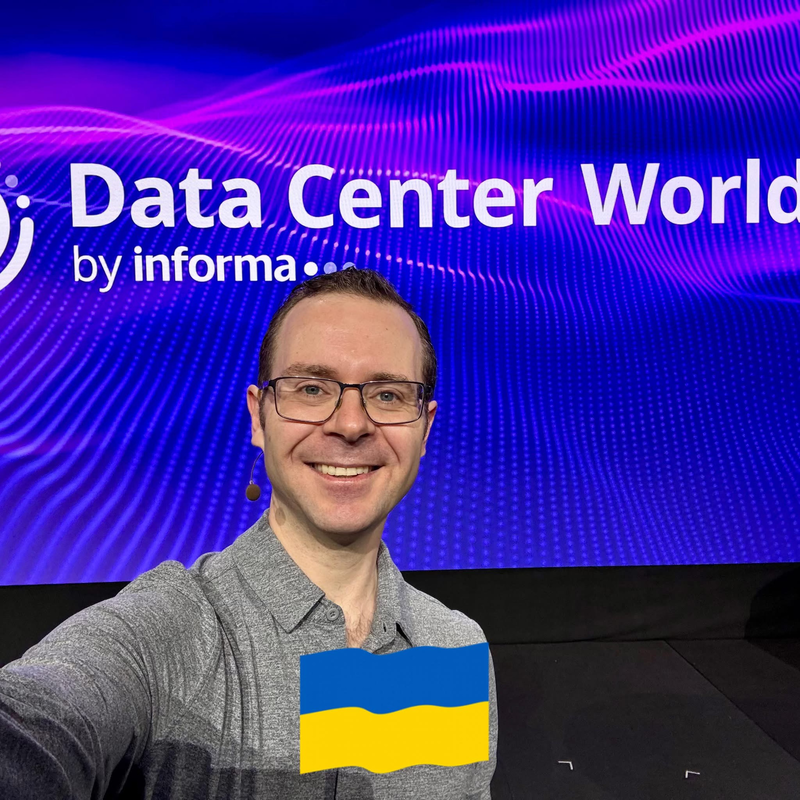
Bill Kleyman
CO-FOUNDER, APOLO.US
Bill Kleyman is the CEO and Co-Founder of Apolo.us, a next-generation AI infrastructure platform powering scalable, secure AI development for enterprises, telcos, and data centers. A recognized technology executive, industry analyst, speaker, and writer, Bill brings decades of experience across cloud, AI, hyperscale infrastructure, and digital transformation. Previously, he held leadership roles at EPAM, Switch, and MTM Technologies, driving innovation in AI, DevOps, and enterprise IT strategy. Bill is also a trusted advisor, mentor, and board member known for making complex technologies approachable. In 2021, he received the iMasons Education Champion Award for his contributions to technology education and leadership.
Subscribe to our mailing list to receive updates on upcoming episodes!
Transcript
Show the full transcript
(0:00:10) Welcome to another episode of True Talks, and it is with great pleasure that
I have a wonderful guest, Bill Kleiman. Welcome to the show. Oh my gosh, Andy, if
you can’t tell, I am pretty excited. This is the end of the day, by the way. This energy
level has not stopped because I’m like, I got a call.
(0:00:29) with Andy coming up. So I gotta, I gotta maintain this level of caffeine. You
ready for the secret? I’ve already changed. Switch to water. There’s, there’s, there’s
no more coffee here. Andy, thank you for having me here. I am Bill Klayman. I am the
co-founder and CEO of Apollo. Check this out right here.
(0:00:45) Apollo with one L. And in case you’re curious, yes, it does have something to
do with space. We can talk about the inception of the name, but I’m also very happy
that those folks are out there in the art of a spaceship coming back home here very,
very soon. I am also the executive director
(0:01:00) chair of data center programs up for apcom and informa and i have the
honor and pleasure of overseeing uh… what is officially the world’s largest and
longest running conference that is data center world coming up in my car for two
weeks and washington dc uh… i sit on a number of boards i am the co-chair of the
people program all red infrastructure mason’s an advisory board member at nomad
futurist guest lecturer at usc school of engineering
(0:01:27) contributing editor i’ve written a couple no i’ve never and i’ve eighty eighty
so i can’t write a whole book i’ve co-authored a couple of amazon bestsellers uh…
and in case you haven’t noticed uh… this is just as all natural energy because i i love
this industry and i love what we do thousand long introduction i’m sorry i was so
long-winded
(0:01:44) It was perfect, Bill. Bill, how many years have you been doing this? Give me
a bit of a timeframe there. How long have you been working on the data center
space? I graduated. You know what? Let me back up a little bit. If you ask a room full
of people, did you plan on being in the data center industry? I will shift.
(0:02:01) Thank you.
(0:02:20) And other massive information security. But to answer your question, Andy,
I started in this thing back in 2005. And before we get into even the first question, I
can tell you that the past 24 months has surpassed my last two decades of
experience in industry. And I love it.
(0:02:37) Bill, I think that does, what a great segue to the first question. So you and I
kind of chose a title for this episode. It’s Building at AI Speed, the Reality of Data
Center Delivery. And are we breaking that delivery model? I think that’s where I want
to start the conversation. Bill, you have a great view of
(0:02:59) of the biggest shift we’ve seen in many years. And AI is driving a massive
wave of data center investment. From where you sit, Bill, on the front lines, what are
you seeing today?
(0:03:12) you know there’s a there’s so many things that we can we can sort of dive
into here and start to really discuss in terms of what’s happening and you can throw
trends and numbers you know what you don’t any well will do that will will make sure
we talk about this over that uh… by the way by the way i’m hoping that this show
gets me even more wonderful human beings that i can connect with in case you have
a notice i want to continue this conversation to find me on linkedin we can keep
chatting about this
(0:03:39) but you know what’s what’s wild about this industry is okay let me use an
analogy music we live in a world that just discovered oil but hasn’t invented the
internal combustion engine we got all this raw material and we’re just starting to
figure out what to do with it and i’ve been in this industry for about twenty years and
here’s the one thing that i can tell you for all of this time we assume that if you build
a data center
(0:04:04) Power’s going to follow. And I can confidently say that era is over. It’s in
your own words, it’s it’s broken. Right. And we’re at a place right now where AI is
forcing these fundamental shifts as AI evolves from.
(0:04:20) facilities that are energy consumers you ready for this to becoming energy
producers right where we’re integrating blending on-site power generation storage
grid integration to keep pace with demand so when you start talking about you know
is it broken are we are we changing things oh my gosh you you better believe it the
way we build these facilities like we just we just can’t do it anymore uh… and and just
to kind of give you give you some perspective so i get a chance to write
(0:04:48) the AFCOM state of the data center report, all right? And I’ve written that
puppy for the past 10 years. So this is the 10th anniversary edition, yay. And when we
wrote the report 10 years ago, the average rack density, and for everybody listening,
that’s how much stuff you can shove into a data center rack
(0:05:06) was about 6.1 kilowatts per rack. This is 10 years ago. Now, let’s go back just
a little bit further. Ken Patchett, who, if you’re listening to this, hey, buddy, he’s
currently at Lambda Labs. In 1988, he was working at Microsoft, and you know what
he told me? He’s like, Bill, the average rack density at a Microsoft data center in 1988
(0:05:26) It was one kilowatt per rack, Andy and everybody listening. You could cool
that with a box fan and plenty of bill claim and optimism. You’re all set, right? Um,
but fast forward to today, last year, our report showed that average rack density of
16 KW this year, 27 KW per rack, a 70% jump year over year. So now we’re redefining
what these facilities look like, how we actually work with the racks and not to blow
this thing completely out of proportion.
(0:05:56) Last year at GTC, Jensen Huang gets up on stage. You know what he shows
off? The NVL 576. Do you know what that is? 600 KW per rack. At this point, it just
doesn’t matter. Keep adding zeros, Jensen. That’s what we’re going to be looking at.
And when you start to take a look at this, I’m using your words, Andy, this broken
paradigm. Have we broken the architecture? My gosh.
(0:06:19) You better believe it. We have new power systems designs, new
requirements for, obviously, the dissipation of heat from mechanical equipment.
We’re talking about bringing direct current DC right into the rack because all of a
sudden, if you talk about a one-megawatt rack and you’re bringing AC power, your
power cable is going to look like this, like a giant can of soup. But if you start bringing
in DC, it’s like a AA battery. But that requires a new thinking about…
(0:06:46) Power consumption, load bearing, battery systems, the way you design this
environment as well. That was a very long-winded answer there, Andy, but oh my
gosh, is it breaking? I think we’ve just absolutely blown the doors open of our
concept of what a facility actually looks like in the age of AI.
(0:07:06) Bill, fantastic. So let’s double click on that. So if you think about the scale
and you add the urgency to it, how are you starting to see projects being planned? So
step back, right? You’ve got a new facility. We’ve got new facilities popping up in
brown sites, new greenfield sites. But what are people doing from the fundamentals
when they sit back and say this campus, which includes power, water, energy,
(0:07:34) energy. What are you seeing? What are some of the changes to meet that
scale and urgency at the planning stage?
(0:07:43) I truly believe that you need two things to be successful right now in this
industry. You need power and you need bravery. And we’re quickly realizing what
that second part looks like because it’s deeply introspective. Um, and what I want to
challenge everybody, right? And there’s, there’s a really fun saying out there and
you’re going to hear me use all these fun acronyms and, you know, adjacent
terminology.
(0:08:07) So Peter Gross, he’s one of the godfathers of this industry, and I’m really
proud to say he’s a board member of Apollo, my company. And he used to say that,
you know, the data center industry loves innovation as long as it’s 10 years old.
(0:08:21) Well, we don’t have 10 years. You blink and 10 months goes by. So you have
to reimagine your approach to building these facilities. Let me paint a perspective for
everybody listening because, Andy, you asked the right questions and you want to
double click on this. I recently presented and attended the Schneider Electric
Innovation Summit. And while I’m sitting there listening to the presentation, they
came out with a new metric. Everybody listening, just follow me for a second here.
(0:08:51) the new uh… sort of uh… you know uh… of black poll they were aiming to
how much power our issues going to consume by twenty thirty is now estimated two
hundred gigawatts
(0:09:03) 200 gigawatts of power just for data centers alone. Now for people
listening, that might be like, Bill, you just said some really big things. I don’t know
what this means. Okay. One gigawatt is enough for a city of a million people. 10
gigawatts is a New York or a Los Angeles. A hundred gigawatts is about 10% of all the
lights
(0:09:23) that are currently on in the entire world so when someone comes to me and
says bill we’re gonna require two hundred gigawatts of power in the next four and a
half years to me that’s a go cool Google she want to build you what 20 LA’s 20 New
York City’s with the power like that just doesn’t appear magically overnight so we
have to reimagine what this looks like that’s why on-site power generator generation
is changing the game why we’re seeing so much creativity but I want to answer your
question specifically
(0:09:50) what our industry what is our industry and specifically organizations that
are building out new infrastructure uh… doing to get ahead of this curve there’s a
new facility that’s
(0:10:00) coming online. That’s handling hundreds of kilowatts per rack. It’s coming
up in Phoenix. And here’s the kicker. The, what stood out during the design process,
the early design process is here’s the secret sauce. Power cooling and connectivity
were all brought in early.
(0:10:19) way earlier during design and planning process that you would have even
considered in the past and that goes back to my earlier statement where the way we
look at this architecture right now where you know you build a building and you
assume the powers gonna come full stop that that’s not how you can look at this
thing any longer right now time to market speed to market getting the right partners
in place and securing those existential resources
(0:10:46) Well, that’s paramount to you being able to bring up a facility online. Look,
the average size of our facilities is getting ridiculous, right? In our data center report,
the state of the data center, the average size is now 38 megawatts. I remember,
Andy, and everybody listening,
(0:11:03) that was a full-blown campus now it’s like one building in a giant campus
and that’s how much has changed the size of these facilities what we’re hosting in
them and the other big part of it is that we’re not power
(0:11:18) consumers anymore. We’re power producers as well. The nature of our
facilities is changing. And along with that, we can’t be complacent. We can sit still, but
bringing those core components into the design, into the build, into the engineering
construction process, that’s what gets your facility up and running faster. That’s what
gets your facilities up and running, uh, in a much more effective way. But ultimately,
(0:11:42) That’s what helps you secure, at least from a future perspective, a stronger
foothold in an industry where, let’s just be clear, demand is not an issue.
(0:11:55) Yeah, it’s cute, Bill. I think you hit on something that, you know, I always try
to pull out some truths and hence the name Truth Talks for the episode. I think that
is so important that people understand. Listen, you can’t go to any small town, any
large city, and people are talking about data centers. Somehow it’s impacting that. It
could be job creation. It could be people worried about power consumption, you
know, as you explained. But you said something that I think is really important and
key.
(0:12:24) you’re actually generating power, right? That’s that’s so important because
you hear a lot of people say, oh, they’re worried about, you know, the power, what’s
available, how much is available. But that point you make is really, really critical,
right? You’re actually generating power. You’re using water, reclaiming the water. So
the environmental impacts, I think if there’s one thing that’s that we need to do a
good job on is making sure people understand the benefits of the data center
coming to your town, to your city, to your community. That’s very important.
(0:12:54) Thoughts on that, Bill? I couldn’t agree more.
(0:12:58) i recently wrote an article on data center knowledge uh… where i’m good
shipping editor calling the data sent to the new front line and uh… and i i literally
andy as as we’re discussing this i’m i’m gonna i’m actually gonna have a send this this
link to you i did a face book post and i’m gonna send it to you right now and i i call
out the fact that we we live in a very fragile moment right now for the data center
industry we’re seeing legislation being passed to halt data center construction an
entire state is saying i’m banning any facilities to coming online
(0:13:29) And Andy, I.
(0:13:32) You can tell that I’m usually a very positive individual. I love what I do. I love
educating people. But for the first time in my history in this space, we saw physical
violence, right? There was 13 rounds put into a lawmaker’s door in Indianapolis
because they wanted to repurpose an old industrial site to become a data center,
right? And this isn’t NIMBY anymore, right? This is showcasing that there’s something
that’s actually fundamentally broken, right?
(0:14:00) between our ability to communicate the benefits of our facilities and the
perception right and i’m heartbroken and i’m sad that there’s actual metrics to prove
this so in the afcom state of the data center report for nine years in a row
(0:14:16) The number one threat to critical physical infrastructure was ransomware
and data exfiltration. For the first time in 10 years this year, it was human threats,
accidental or non-accidental human threats against these facilities. And so now we’re
starting to see this happen in real life in the world. Um, I, I don’t, I don’t know what
the answer is, but obviously result is resorting to violence is, is never going to be, um,
(0:14:41) It’s never going to be an answer. The simple truth is that w w we’re not
going anywhere and neither is demand. And, you know, Kirk all fell recently posted,
uh, another note saying that, you know, you, you can’t be both a, you know, you can’t
both benefit and also detract from this kind of technology, right? It’s that it doesn’t
work this way. This portion is pull, right? You’re, you’re clearly using AI and
generative AI. So how do you, how do you get your mind straight?
(0:15:06) We do have a PR problem, right? We do have a situation right now where we
went from this industry that was, you know, very little known about us. We were
these nondescript buildings in the middle of nowhere to all of a sudden, you know,
look at us. We’re having a moment. People know who and what we do. I’ve had more
conversations around data centers with people who would have never asked them
before in our entire life.
(0:15:28) Um, Andy, I feel like this is a very special moment. Data center world is
going to have a policy forum. We’re going to have, uh, lawmakers, senators,
representatives, uh, folks from the current administration, previous administration,
uh, there to specifically discuss the impacts of digital infrastructure. And, and it’s not
from, uh, like, uh, you know, do we build it? Do we not build it? These things aren’t
going anywhere.
(0:15:49) how do we become better partners how in the crisscross be coined this
term how do we become a hundred-year neighbor that’s ultimately what we’re going
to become uh… i don’t and force i have a solution on this on this call i think it’s a
much deeper problem uh… that we’ve had to as an industry because we’ve kept quiet
it shot us in the foot unfortunately and and now we’re in a position where there’s so
much p r there’s so much uh… negative conversation and to be honest with you it’s
because
(0:16:17) We are easily the largest non-regulated industry that’s now critical
infrastructure. Is that going to change? Quite possibly. Do you think we might start
facing regulation as we become power producers? It’s quite possible as well. Is it a
bad thing? You know, I don’t know. Maybe it’s actually something that becomes good
and allows us to work more closely with utilities, more regulated industries, because
maybe that’s simply what this industry finally needs. But there’s a lot of work ahead
of us in this topic.
(0:16:47) No, I think it’s key. And, you know, just in the small community that I live in,
I live a little north of the city of Pittsburgh. I mean, you can look at the positives.
There was an old coal fire power plant along the Ohio River, literally just a mile and a
half from my house.
(0:17:04) And that’s being converted to gas, right? Which is a great clean energy. And
it’s being converted to power of a massive data center, right? So again, it’s creating
jobs. It’s taking a rundown old coal plant, converting it to clean energy with gas. It’s
creating a data center. It’s creating jobs for that data set, long lasting jobs. So like
you said, for all the…
(0:17:27) For all the negative that’s out there, you can very, very easily combat that
with very positive and, you know, being part of the, you know, living in the still belt
for as long as I have. I mean, we always look for that innovation, that next industry
that’s going to change, you know, change people’s lives forever. So keep up the good
work. 100%.
(0:17:50) a hundred saying i’m i’m gonna add to that a little bit so so switch data
centers my alma mater just just shy four years there uh… you ready for this metric
they consume thirty percent all the power in the state of nevada thirty percent and
yet and yet somehow because of the relationship that they have and the close ties
the utility commission
(0:18:12) They’re actually one of the very few states who’s lowering the rates for the
ratepayers in their communities. Whoa, whoa, whoa, whoa. You’re talking about a
facility that if you flip the power, it could literally light up the entire strip.
(0:18:27) That’s how much power they consume, right? But you’re also saying that
because of relationships, strategic partnerships, they can actually lower these rates.
Yes, this is all possible. But again, there’s a lot of work that needs to get done to, you
know, move beyond legislation to go actually create these great partnerships,
utilities and commissions, and honestly work with an aging grid to make something
special happen that benefits the people who are both living close to data centers but
also paying electrical bills.
(0:18:55) Yeah, for sure. Absolutely on that. So let’s shift the conversation. So, you
know, why do I and my team at Contrument, why do we care about this market? And
we look at capital programs, you know, massive capital programs that encompass
the entire ecosystem of data centers, everything we’ve talked about, power, water.
(0:19:18) building the facilities, the campuses. Bill, that capital expenditure is so
massive. The funding for it, even the largest, most successful organizations in the
world are having trouble managing that capital, making that capital available. The
scale
(0:19:37) just the fast deployment of capital. Bill, from your vantage point, what are
companies doing around managing that capital? Really, I’ve heard numerous times,
cost doesn’t matter. Such a big issue. I got to believe cost does matter. Schedule
obviously matters. You have to have your facility up
(0:20:00) running. People are depending on having their information or AI
distributed. And then more importantly, there has to have visibility of cost schedule.
So Bill, what’s your thoughts on that? Well, how are organizations getting their hands
around these massive capital expenditures and how are they looking at costs and
how are they managing schedule across their portfolios?
(0:20:21) Well, let’s just say the obvious. There’s a tremendous amount of capital
being passed into the digital infrastructure industry, whether it’s telco, whether it’s
physical building infrastructure, building these AI factories, et cetera. We’re not short
on cash. I think that maybe sometimes we’re a little bit short on direction. And I’ve
had the question asked me, Bill, are we overbuilding? Right. And you know, I, I, I
don’t, I don’t necessarily believe that right now because this is all about building the
foundation for the future. Right.
(0:20:49) uh… i think if we take a step back a little bit understand the implications of a
i these high-density workloads uh… this isn’t this isn’t a technology shift everybody
listening right this is uh… i shift in humanity right the way we interact with data and i
promise andyel after i’ll answer the question the way we interact with data has
fundamentally changed for forever right what’s wild about that is that every single
person listening to this watching this your user of generally i’d whether you like it or
not
(0:21:17) just a couple of years ago before 2023, right? We were trained, we were
conditioned as human beings to interact with data in a very specific manner. Andy,
uh, who wants to ask a question, he’ll go on his favorite search engine. It could be
ask a Jeeves or Alta Vista. And if he’s feeling feisty, maybe even Google or Bing, you
know, it’s funny. I recently did that bit at,
(0:21:38) the ask a Jeeves one in front of some high school students. And they’re like,
what, what is this guy asking his Butler for directions? What’s an ask Jeeves? So I can’t
use that. And I also can’t use the word Rolodex in front of high school students.
Cause they’re not going to know what it is.
(0:21:49) Um, but when we started to take a look at this, we’ve been interacting with
data via blue links, right? So Andy goes and he asks a question and he gets a whole
bunch of blue links. God forbid. Andy ends up on page two of Google. Forget it.
You’re lost at this point. You just give up on it. You’re asking the wrong question. You
know, give up, ask again. Now, if you go on your favorite search and you ask a
question, the first response is no longer blue link is it’s a, it’s a full blown original
information.
(0:22:15) AI generator response. That’s how fast we under the human condition have
been, uh, how, how fast we’ve been forced to change the way we think about how we
ask questions and how we interact with data. All right. That take that for what it’s
worth. That’s our new sort of iteration of AI. Now moving beyond that, uh, you know,
humanity’s first instinct whenever we discover anything new is can we let it on fire?
(0:22:40) And the equivalent of that is ChatGPT. But obviously what we’ve learned
over the past couple years that ChatGPT and Copilot, it’s not the answer for
everything. We’re seeing AI agents, AI workflows, new kinds of AI apps, really specific
types of tools. That’s what my company, Apollo, actually focuses on. We don’t build
elephants on a unicycle.
(0:22:59) They look great, but they don’t do anything for your business, right? We
build these powerful AI agents and apps that specifically live in highly secure
environments, managed and controlled by our own GPUs that we can then deliver to
the end user. But going back to your earlier point,
(0:23:15) Capital and the amount of money that’s being spent, it’s only going to
continue to increase. What I believe is going to become and what’s going to happen
is it’s going to be a lot more strategic, right? We’re going to pick the right markets,
the right areas of where we can invest. Um, look, when I was at switch data centers, I
was super honored and it was, it was a moment of like learning for me to be a part of
a team that, you know, when I joined, we were four and a half billion dollars public
trade organization. Here I am, you know, uh,
(0:23:41) Working with this amazing team that ultimately we positioned it and we
sold this company to IFM and digital bridge for 11 billion dollars and took the
company private. Now that was in December of 22. Fast forward just a little bit. Look
what happened to line data centers. 40 billion dollars.
(0:23:59) $40 billion sale. Holy cow. Right. And we’re not done seeing those, those
kinds of, you know, billion dollar acquisitions and transactions happening. Um, that
tells me very clearly that there’s still a high level of demand that we haven’t
necessarily seen the end of what this demand cycle looks like. And Jensen Huang got
on stage this year. And do you remember what he announced?
(0:24:26) He said that welcome to the era of inference. That’s it. We’re going to see
inference at the edge. We’re going to start to see more compute, more secondary,
tertiary, fourth level markets coming online. Because let’s be honest, primary
markets are completely saturated, less than one percent percent.
(0:24:46) capacity that’s like nothing that is like nothing in these major markets so
you shouldn’t be surprised if you start to see you know north and south dakota
wyoming are nebraska idaho illinois all these other places that traditionally you know
didn’t have as much critical infrastructure digital infrastructure now coming online
(0:25:05) uh… might might might biggest belief right now is i i really think that while
there will continue to be a massive amount of capital expenditure being spent on
systems and and machines computers in a idea it’s going to become more strategic
and much more aligned with specific market value and and what’s in demand and
right now it’s going to be some of the smaller facilities uh… doing inference actually
we’re at a point or now with these investors a cool cool cool you’ve made all these
larger models
(0:25:33) now let’s see if they can make us some money right beyond his co-pilot
actually can you kick out how does his drive revenue we’re quickly getting to a point
where that’s going to become the biggest part of the conversation in terms of how
do we uh… how do we uh… support this massive capital outlay
(0:25:51) to support these systems. But, but the other reality is this, like it’s, it’s a
natural progression. I understand it’s way more money. I understand that we’re
spending a lot more dollars, but like, look, we’re not working with, with pizza box
servers anymore, right? This isn’t like a five or $10,000, you know, like Cisco or Dell
box, a single chassis of B two hundreds, dude, that’s like half a million dollars. You
know, you’re going from like a Toyota Camry to a Lamborghini here, right? And to
support that Lamborghini,
(0:26:21) you have to have a lot of really expensive parts and components, right? And
a lot of that revolves around some very core existential questions that a lot of data
center operators have to ask themselves. If I’m on raised floor tiles, can I handle the
weight of this gear? Am I capable of putting a water manifold here? Can I design a
new busway or a new power system to handle this new level of density? These are
real design questions that require, like you said, Andy Capital, that requires a
rethinking of the architecture.
(0:26:50) And I think that’s great. I’m, I’m an agent of change. I love being a little bit
uncomfortable as things sort of ebb and flow and evolve, but there’s going to have to
be capital outlay. There’s going to have to be capital flow, but I don’t think it’s
bisguided, right? I don’t believe that we’re necessarily overbuilding this stuff. And I
get the question on bills. It’s like at, like at the.com bubble. I don’t believe that it is
right.
(0:27:11) So much of this is being invested with companies that have a lot of backing,
a ton of foundation, and clearly quite a bit of revenue and customer base as well. So,
you know, very long-winded, clearly. But the way we manage the capital outlay that’s
being spent is just strictly becoming more strategic, not just throwing money in the
wind, but following exactly where this market is going and supporting the systems
that go along with that flow.
(0:27:37) Bill, fantastic. Bill, you’ve been super gracious with your time. I’ve got one
last question. So Bill, you have the opportunity to advise owners of massive data
center campuses, right? That’s what you do every day and all your reporting. If you
were sitting in a room with owners today,
(0:27:54) Right. What would be the one thing that you would tell them that they need
to get right from day one on a brand new facility? Like what is the, what is the, what
is that one thing that they must get right to be successful? I go back to, I go back to
my earlier statement of, uh, of power and bravery. Right. Um, I, I truly believe that in
this industry right now, if I were to really try and summarize it in one sentence,
(0:28:27) be brave enough to begin before you feel ready and discipline enough to
keep learning after everyone else stops. And that bravery is not something I or Andy
or any of those wonderful guests that you’ve had on this show can tell you what it
looks like. Only you can. And that is a true moment of introspection because you can
either choose to keep going or
(0:28:52) and building something special, or you could just hang back. Because here’s
the truth, Andy, we’re still going to need email servers. And we’re still going to need
SQL, and Citrix, and VMware, and Exchange, and web apps. And if you’re going to just
support 10, 15, 20 KW racks, fine. That’s totally okay, right? But if you’re prepared to
take that next leap into that new space, my biggest point here in terms of
(0:29:22) what it takes to be successful, those leaders who will thrive are the ones
that treat change not as a threat to survive, but as a signal to learn more, move and
grow with purpose. That’s it. There’s no secret to it. If I’m sitting there and designing
some of these facilities, and I’m very honored to be amongst those folks that are
building some of these facilities,
(0:29:46) they go after, after these solutions in a, in a completely different kind of
perspective and they’re, they’re, they’re brave about it, but they’re pragmatic. They
go, and this is Chris Crosby says that they build with intention. That’s cute. Very,
(0:30:00) Very good. Bill, I always like to give my guests a final couple seconds on
something that you’re passionate about, something that doesn’t have to be data
center related, but something that you’re passionate about. We will continue this
conversation online. We’ll get this out to all our networks. I have a global audience
that follows this. We’ll have plenty of time to continue the conversation. But Bill, how
do you want to end this? What’s one thing you’d like to share with the audience?
(0:30:25) Oh my gosh. You know, I think, I think so far we’ve, uh, we’ve, we’ve had so
many fun analogies and so many fun acronyms and all, all of that. Right. Um, you
know, is, is, is, is, is a, is a true, truly pivotal moment. Uh, I think in our industry and
the one thing that I wanted, the one golden nugget that I found success in and
others have is you use this moment that we’re having as, as a moment of reflection
for you and your business.
(0:30:51) And, you know, be brave in that reflection and go after a market that’s truly
hungry. And in that process, take a couple of people with you. Help some people
grow. Help some people do something special. Have an open mind. And there’s a
great quote from Ted Lasso. And that’s how we’ll end this. I think be curious, not
judgmental.
(0:31:14) Fantastic, Bill. Bill, I appreciate your time. We’ll continue this conversation
online. My friend, thank you, Bill. It was a great conversation. I appreciate you, Bill.
Thank you, Andy. This was awesome. See you soon. Fantastic